
Great Northumberland Events
Battle of the Somme
Northumberland Remembers
Northumberland and the Somme
The Battle of the Somme was one of the bloodiest battles of the First World War. For Northumberland, its legacy is closely tied to the Northumberland Fusiliers, the Tyneside Scottish and Tyneside Irish battalions, and local men such as Captain John Evelyn Carr, whose diary recorded the events of 1 July 1916.
Fought between 1 July and 18 November 1916, the Somme was a joint British and French offensive on the Western Front. It remains one of the defining battles of the war. On the opening day alone, the British Army suffered more than 57,000 casualties, including 19,240 killed.
Northumberland's strongest regimental connection was through the Northumberland Fusiliers. During the war, the regiment expanded dramatically, raising 50 battalions. Twenty-nine served overseas, and more than 16,000 Fusiliers lost their lives.
The regiment served throughout the Somme campaign in regular, Territorial, service and pioneer battalions.
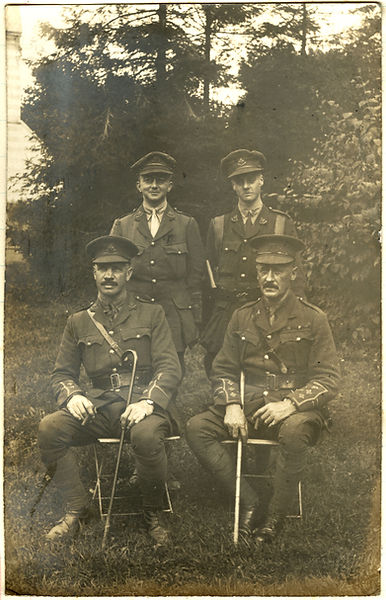
Captain Carr's account
Captain John Evelyn Carr provides a direct Northumberland perspective on the first day of the Somme.
Born in Gosforth in 1871, Carr was one of fourteen children. He became a mining engineer, managing director of the Scremerston Coal Company, and a Northumberland County Councillor. In August 1914, aged 43, he enlisted as a private in the London Scottish. He later received a commission and served with the 11th Battalion Sherwood Foresters and 70th Brigade Headquarters.
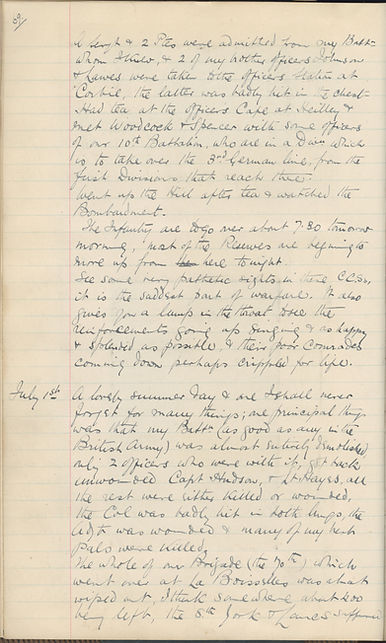
Carr was not a Northumberland Fusilier, but his diary, now held by Northumberland Archives, offers a vivid local record of 1 July 1916.
He described the day as "a lovely summer day" that he would "never forget". He wrote that his battalion had been "almost entirely demolished" and recorded that the 70th Brigade's attack at La Boisselle had suffered devastating losses.
His diary brings the battle beyond casualty statistics. It records named comrades, wounded officers and men stranded in shell holes. Through Carr's words, the human reality of the Somme becomes visible.

The cost to local communities
The Somme's scale can be measured in numbers. Over four and a half months, more than one million men on all sides were killed, wounded or captured. The British advance gained no more than seven miles.
For communities across Northumberland and Tyneside, however, the impact was personal.
Men who had enlisted together were often killed, wounded or reported missing together. News travelled back to mining villages, railway communities, shipyards, factories and town streets where families frequently knew several men serving on the front.
The Northumberland Fusiliers continued to fight throughout the Somme campaign and beyond. Yet the losses suffered around La Boisselle remained a lasting symbol of the battle's human cost.

Somme remembrance
The legacy of the Somme continues to be remembered across Northumberland.
On Wednesday 1 July 2026, Northumberland County Council and the Northumbria Veterans Network marked the anniversary at County Hall, Morpeth.
The ceremony included a focus on the Northumberland Fusiliers, wreath laying, film, poetry, story boards and memorabilia.
The Somme was a vast Allied battle fought across many miles of the Western Front.
For Northumberland, its memory is closely associated with the Northumberland Fusiliers, the sacrifices of the Tyneside Scottish and Tyneside Irish at La Boisselle, and witnesses such as Captain Carr who recorded what they saw.
Remembering the Somme is about more than military history. It is also about remembering the communities, families and individuals whose lives were changed by the events of 1916.
You can learn more at:
-
The Royal Northumberland Fusiliers (National Army Museum)
-
34th Division (The Long, Long Trail)
-
What Was the Battle of the Somme? (Imperial War Museums)
Images from Northumberland Archives - do not use or reproduce without permission.
Somme tributes
